

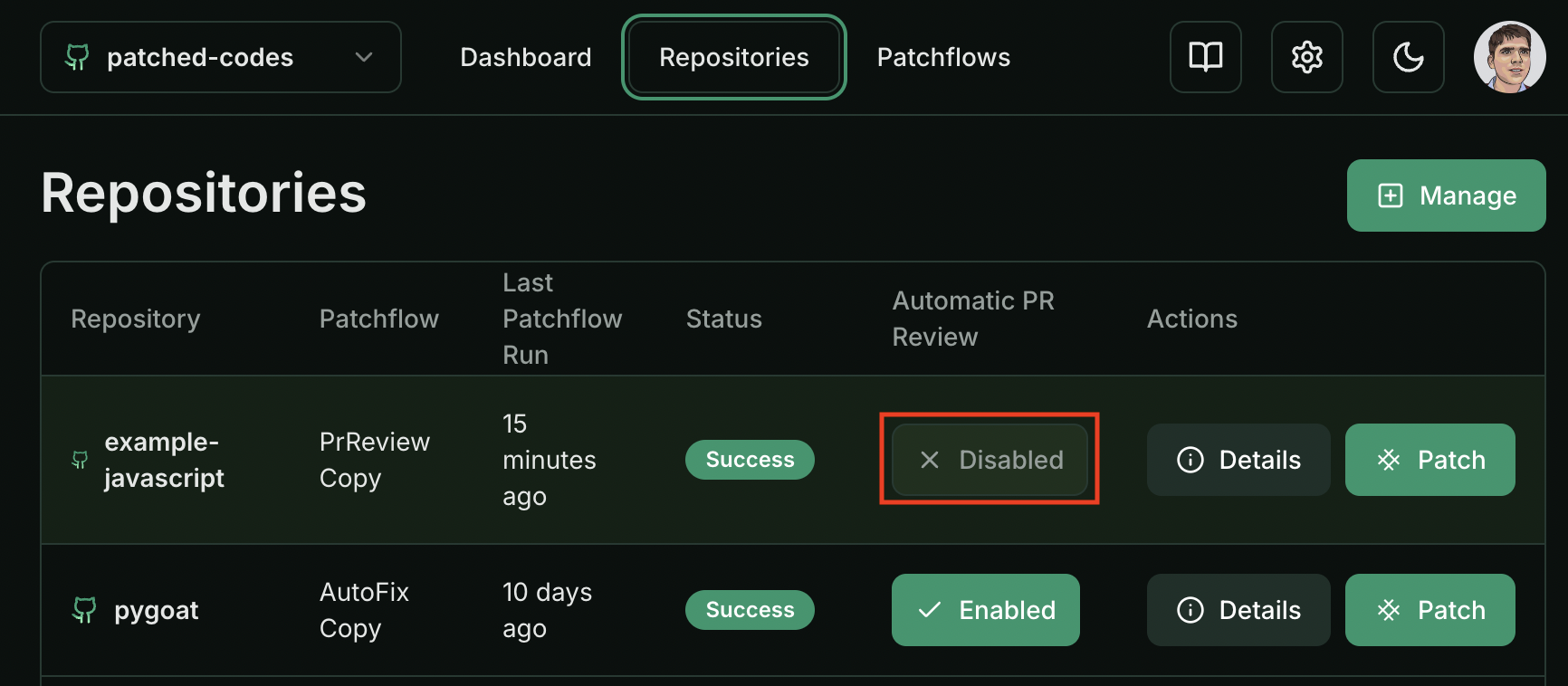
From the Patched Dashboard
- Click the ‘Patch’ button next to the repository you’d like to patch.
- In the pop-up modal, choose the patchflow you’d like to run. You can learn more about the patchflows here.
- Fill in the patchflow specific input values as needed, and click ‘Patch’.
- If the patch was triggered successfully, you should see a toast notificaton on the bottom right.
Using Patchwork CLI
- Install the Patchwork CLI by running
pip install patchwork-cli. - Navigate to the root folder of the code repository you want to patch.
- Run
patchwork <NameOfPatchflow>. The default patchflows areAutoFix,GenerateREADME,GenerateDocstringandPRReview. You can learn more about the patchflows here.
Make sure you set the
PATCHED_API_KEY environment variable with your API key before running the Patchwork CLI.Using GitHub Actions
You can also trigger patchflows from Github actions. The simplest way to do it is to run the Patchwork CLI as a step within your job. For example, to trigger the PRReview patchflow on every pull request that is made to the main branch you can use something like this:GitHub Action
Using Gitlab CI
You can also trigger patchflows from Gitlab CI. The simplest way to do it is to run the Patchwork CLI as a step within your Gitlab CI yaml file. For example, to trigger a review patchflow on every merge request that is made to the master branch you can use the script below:Gitlab CI
Using Webhooks
Coming Soon